
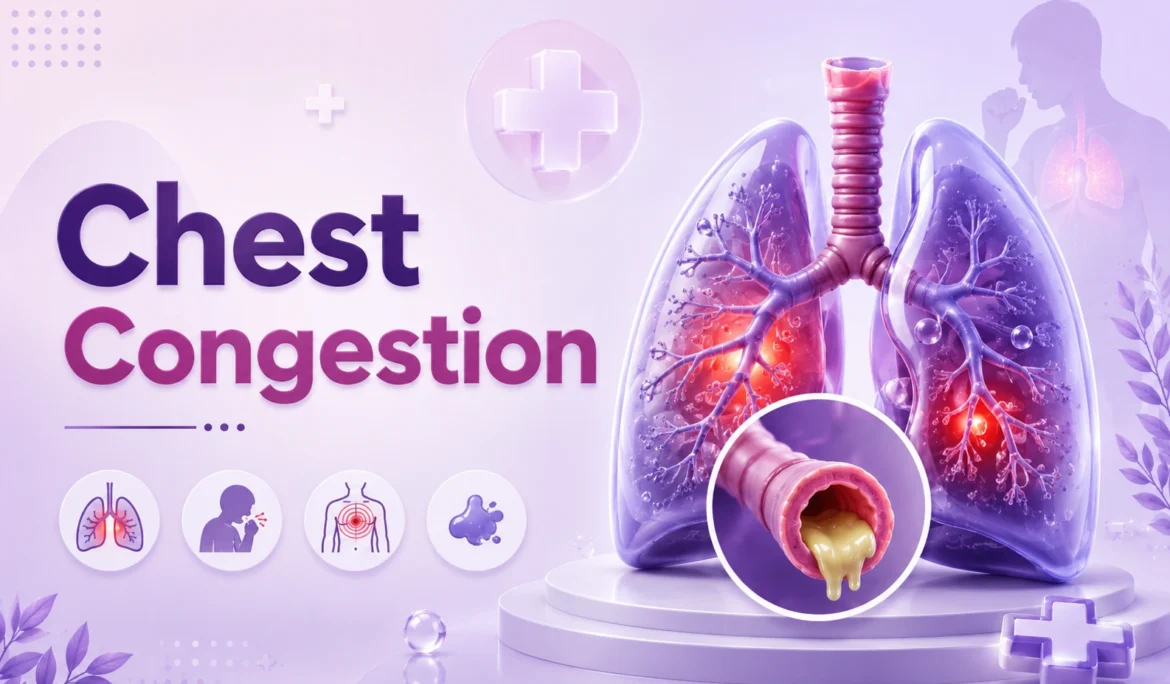
More than 90% of acute bronchitis cases the most common cause of chest congestion are caused by viruses, making supportive care and timely medical evaluation the primary treatment in most patients. Chest congestion occurs when excess mucus builds up in the airways, making it difficult to breathe comfortably and clear the lungs. It is a symptom, not a disease, and may develop due to viral infections, allergies, bronchitis, asthma, or exposure to air pollutants.
In this article, you’ll learn about the common causes of chest congestion, early warning signs, evidence-based chest congestion relief methods, effective home remedies, available chest congestion treatment options, and when it’s time to consult an experienced ENT doctor in Dwarka. If your symptoms continue for more than a few weeks, recur frequently, or are accompanied by breathing difficulty or high fever, seeking advice from an ENT doctor in Delhi can help identify the underlying cause and ensure appropriate treatment.
What Is Chest Congestion?
Chest congestion occurs when excess mucus accumulates in the lower airways, making it difficult to breathe comfortably and clear the lungs through coughing. It is a symptom rather than a disease and usually develops when the airways become inflamed due to infections, allergies, or other respiratory conditions.
Normally, the respiratory tract produces a small amount of mucus to trap dust, germs, and other harmful particles. Tiny hair-like structures called cilia move this mucus out of the lungs. During a viral infection or airway irritation, the body produces more mucus than usual. The mucus also becomes thicker, making it harder to expel and leading to the feeling of heaviness or “phlegm in the chest.”
Chest Congestion vs. Nasal Congestion
Although the two conditions are often confused, chest congestion and nasal congestion affect different parts of the respiratory system.
Chest congestion affects the lungs and lower airways, causing symptoms such as:
- Persistent cough with mucus
- Chest tightness or heaviness
- Wheezing
- Shortness of breath
- Crackling sounds while breathing
Nasal congestion, on the other hand, affects the nose and sinuses and is commonly associated with:
- Blocked or stuffy nose
- Runny nose
- Sneezing
- Facial pressure
- Reduced sense of smell
Some respiratory infections, such as the common cold or influenza, may cause both nasal and chest congestion at the same time.
Chest Congestion Symptoms
Chest congestion symptoms can range from mild discomfort to breathing difficulties, depending on the underlying cause and the amount of mucus in the airways. While many cases improve within a few weeks, persistent or worsening symptoms should not be ignored.
Common Chest Congestion Symptoms
The most common signs of chest congestion include:
- Persistent cough with clear, white, yellow, or green mucus
- A feeling of heaviness or tightness in the chest
- Difficulty clearing mucus from the lungs
- Wheezing or whistling sounds while breathing
- Shortness of breath, especially during physical activity
- Crackling or rattling sounds in the chest
- Sore throat caused by frequent coughing
- Fatigue and reduced energy levels
- Mild fever if chest congestion is caused by a respiratory infection
The severity and duration of these symptoms often depend on whether the congestion is caused by a viral infection, allergies, asthma, bronchitis, or another underlying condition.
Best Home Remedies for Chest Congestion Relief
Most cases of viral chest congestion improve with supportive care, and staying well hydrated can help loosen mucus and make it easier to cough out. While home remedies cannot cure the underlying infection, they can provide effective chest congestion relief and reduce discomfort during recovery.
1. Drink Plenty of Fluids
Keeping yourself hydrated helps thin thick mucus, making it easier for your body to clear it from the airways. Water, warm herbal teas, clear soups, and warm lemon water are good choices. Limiting caffeinated and alcoholic beverages can also help prevent dehydration.
2. Inhale Warm Steam
Steam inhalation may help soothe irritated airways and loosen mucus temporarily. Taking a warm shower or inhaling steam from a bowl of hot water for a few minutes can provide short-term relief. Always use caution to avoid burns, especially in children.
3. Use a Humidifier
Dry indoor air can worsen coughing and throat irritation. Using a clean cool-mist humidifier adds moisture to the air, helping keep the airways comfortable and reducing mucus thickness. Clean the humidifier regularly to prevent the growth of mould and bacteria.
4. Gargle with Warm Salt Water
If chest congestion is accompanied by a sore throat or frequent coughing, gargling with warm salt water several times a day can help soothe throat irritation and reduce discomfort.
5. Drink Warm Fluids
Warm beverages such as ginger tea, herbal tea, or clear broth may help loosen mucus, soothe the throat, and provide temporary relief from chest tightness. Warm fluids also help maintain hydration during respiratory infections.
6. Take Adequate Rest
Rest allows your immune system to focus on fighting the infection. Avoid strenuous physical activity until your symptoms begin to improve, and ensure you get enough sleep to support recovery.
7. Sleep with Your Head Elevated
Sleeping with an extra pillow or raising the head of your bed can improve mucus drainage and reduce coughing at night. This simple measure may also make breathing more comfortable while sleeping.
When Home Remedies Are Not Enough
Home remedies are suitable for mild chest congestion caused by viral infections or temporary airway irritation. However, if your symptoms worsen, recur frequently, are accompanied by high fever, severe shortness of breath, chest pain, or coughing up blood, seek prompt medical care. An experienced ENT doctor in Dwarka can determine the underlying cause and recommend the most appropriate chest congestion treatment based on your condition.
Chest congestion is usually a temporary symptom, but it should never be ignored if it persists or worsens. While many cases improve with rest, hydration, and simple home remedies, persistent chest congestion may indicate an underlying condition such as bronchitis, allergies, asthma, or a respiratory infection that requires medical attention.
If you have persistent chest congestion, recurrent cough, breathing discomfort, or symptoms that do not improve with home remedies, consult Dr. Payal Bhattacharjee, an experienced ENT doctor in Dwarka.
Whether your chest congestion is related to allergies, recurrent respiratory infections, post-nasal drip, or other ENT conditions, early diagnosis can make a significant difference in your recovery. Schedule a consultation with Dr. Payal Bhattacharjee to receive expert care, accurate diagnosis, and effective chest congestion treatment tailored to your individual needs.