
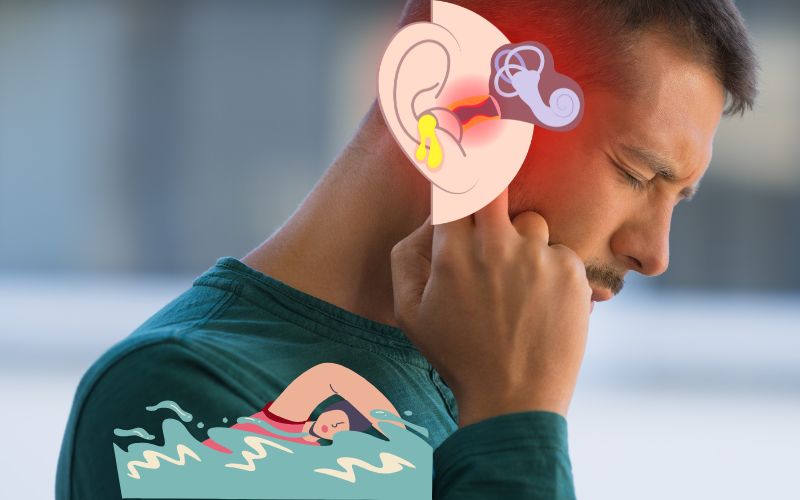
People often call it swimmer’s ear. Doctors know it as otitis externa. The condition affects the outer ear canal, the tube that carries sound from the outside to the eardrum. Water in the ear can start the problem, especially when it stays trapped after swimming or bathing. The warm, moist skin becomes soft and fragile, giving bacteria or fungi a chance to grow. This article explains the cause, signs, and care. It shows how ENT doctors in Dwarka diagnose and treat the infection. It also highlights when to seek urgent attention.
Otitis externa meaning and how the ear changes
The ear canal has thin, delicate skin. That skin protects the ear and keeps it dry. When water stays inside, skin swells and softens. Bacteria then grow in the wet, warm space. Fungi can also cause the infection in some cases. The result is redness, pain, and discharge.
Who gets swimmer’s ear, common risk factors
- Frequent swimmers and divers
- People who put objects in the ear
- Those with eczema or skin problems
- Users of hearing aids or earplugs
- People with narrow or hairy ear canals
- Diabetics or immune-suppressed people (higher risk)
How the infection usually begins and feels
Symptoms often start after water exposure. Itching is often the first sign. Pain then appears and worsens with jaw movement. You may notice muffled hearing or ear fullness. A smelly discharge can drain from the ear. Severe pain, swelling, and fever mean urgent care.
How an ENT doctor in Dwarka, Delhi confirms otitis externa
- Visual exam with an otoscope or microscope
- Look for red, swollen ear canal skin
- Check for discharge and trapped debris
- Remove ear wax or foreign matter if needed
- Take a swab when infection is severe or unusual
- Test hearing if hearing loss or severe symptoms occur
First-line treatment, ear drops and cleaning for Otitis Externa
Topical ear drops are the main treatment. Drops often mix antibiotic and steroid. They reduce bacteria and lower swelling. An acidic solution may restore ear defenses. The ENT doctor first cleans the canal carefully. Cleaning allows drops to reach the infection well.
When oral medicine or other steps are needed
- Oral antibiotics for spreading infection or fever
- Antifungal drops for fungal causes
- Systemic treatment for diabetics or immuno-compromised
- Surgery for abscess or deep tissue spread (rare)
- Hospital care for malignant otitis externa risk
Safe home care and pain relief you can use
Keep the ear dry while it heals. Don’t insert cotton buds or objects into the ear. Use simple pain relievers when needed. Warm compresses can relieve severe pain. Put drops exactly as the doctor prescribes. Stop swimming until the ear fully heals.
Prevention tips for swimmers and daily life
- Dry ears after water exposure with a towel
- Tilt your head and tug the earlobe to drain water
- Use a hairdryer on low at arm’s length
- Use earplugs when you swim
- Avoid aggressive cleaning with cotton swabs
- Treat eczema or dermatitis near the ear early
Risks and complications to watch for
Most cases clear with timely treatment. Complications are rare but serious. Malignant otitis externa can destroy tissue. This mainly affects older diabetics and weak immune systems. Hearing usually returns after the infection heals.
Many ENT clinics in Delhi offer ear microsuction services Swimmer’s ear treatment in Delhi often uses drops plus cleaning. For complex cases, ENT Clinics offer advanced care.
Questions patients ask most often
No, it is not passed person to person.
Use only doctor-prescribed drops for safety.
Pain often eases in 48–72 hours with drops.
Wait until your doctor confirms full healing.
Swabs help when infection resists treatment.