If your partner keeps nudging you awake because of your snoring, or you wake up gasping for air with no idea why, you’re not just dealing with a noisy nuisance. You could be dealing with sleep apnea, a real medical condition that affects your health far beyond a restless night. As an experienced ENT doctor in Delhi, Dr. Payal Bhattacharjee sees this pattern often: patients who’ve normalised loud snoring for years, without realising it might be a sign of something that needs proper evaluation and treatment.
This guide breaks down what sleep apnea actually is, how it’s connected to snoring, what raises your risk, how it’s tested, and what treatment in Delhi actually looks like.
What Is Sleep Apnea?
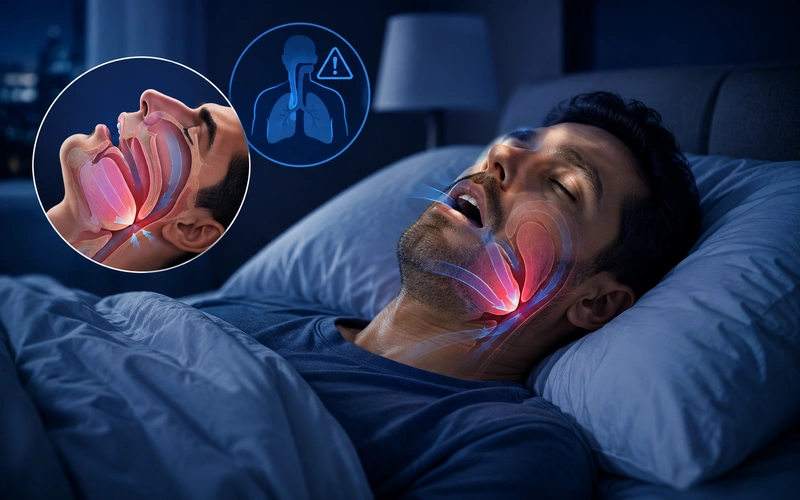
Sleep apnea is a sleep disorder in which your breathing repeatedly stops and starts throughout the night. The most common form, obstructive sleep apnea (OSA), happens when the muscles at the back of your throat relax too much during sleep, causing the airway to narrow or collapse. Each pause in breathing, called an apnea event, can last anywhere from a few seconds to over a minute, and it can happen dozens or even hundreds of times a night in more severe cases.
Every time breathing stops, your brain briefly wakes you up, often without you even realising it, just enough to reopen the airway and resume breathing. This constant cycle prevents deep, restorative sleep, even if you technically spend eight hours in bed.
Is Snoring the Same as Sleep Apnea?
Not always, and this is one of the most common misunderstandings patients bring up. Snoring happens when air struggles to move freely through a partially narrowed airway, causing the soft tissues in your throat to vibrate. It’s extremely common and doesn’t automatically mean you have sleep apnea.
That said, loud, persistent snoring, particularly snoring interrupted by gasping, choking sounds, or silent pauses in breathing, is one of the most reliable warning signs of obstructive sleep apnea. In fact, a study of the Delhi population found that among habitual snorers referred for sleep testing, close to 47 percent were confirmed to have obstructive sleep apnea on formal sleep study, compared to under 3 percent of people who weren’t habitual snorers. In short: not every snorer has sleep apnea, but snoring loudly and regularly is a strong enough signal that it’s worth getting properly checked, especially here in Delhi, where this exact link has been studied directly.
Why Do I Have a Blocked Nose While Sleeping?
Nasal blockage is one of the most overlooked contributors to both snoring and sleep apnea. When you can’t breathe comfortably through your nose, your body compensates by breathing through the mouth, which makes the airway more likely to collapse and vibrate during sleep. Common causes of nighttime nasal blockage include:
- Deviated nasal septum
- Chronic allergic rhinitis
- Nasal polyps
- Enlarged turbinates
- Sinus congestion or chronic sinusitis
- Seasonal pollution and allergens, particularly relevant in Delhi’s air quality conditions
Because nasal obstruction is a structural, ENT-specific issue, it’s often one of the most treatable contributors to both snoring and sleep apnea, and identifying it properly can make a significant difference in treatment outcomes.
Sleep Apnea Risk Factors
Certain factors increase your likelihood of developing obstructive sleep apnea:
- Excess body weight: Extra tissue around the neck and throat can narrow the airway
- Age: Risk increases with age, generally levelling off after 60 to 70
- Sex: Men are diagnosed more often than women, though risk in women rises notably after menopause
- Neck circumference: A thicker neck can mean a narrower airway
- Family history: A genetic tendency toward airway anatomy that predisposes to apnea
- Alcohol, sedatives, and smoking: These relax throat muscles or irritate the airway, increasing collapse risk
- Nasal congestion: Whether from allergies, structural issues, or chronic sinus problems
- Enlarged tonsils or adenoids: Especially relevant in children with sleep apnea
- Underlying conditions: Such as hypothyroidism or PCOS, both linked to higher OSA risk
If several of these apply to you, particularly alongside loud snoring, it’s worth discussing a sleep apnea test with your doctor.
Signs You Shouldn’t Ignore
Beyond snoring, common symptoms of sleep apnea include:
- Waking up gasping or choking
- Morning headaches or a dry, sore throat on waking
- Excessive daytime sleepiness, even after a full night’s sleep
- Difficulty concentrating or memory lapses
- Irritability or mood changes
- Waking up frequently during the night
- Reduced interest in daily activities due to constant fatigue
Left untreated, sleep apnea has been linked to a meaningfully higher risk of high blood pressure, heart disease, stroke, type 2 diabetes, and cognitive decline over time. This is exactly why sleep apnea shouldn’t be brushed off as “just loud snoring.”
How Is Sleep Apnea Diagnosed? The Sleep Apnea Test
If your doctor suspects sleep apnea based on your symptoms and risk factors, the next step is a sleep study, medically known as polysomnography. This can be done in a few ways:
- In-lab polysomnography: An overnight sleep study conducted in a clinical setting, monitoring your breathing patterns, oxygen levels, heart rate, brain activity, and body movements. This remains the gold-standard diagnostic test.
- Home sleep apnea testing: A simplified, portable version of the test that you can do in your own bed, generally used for patients with a high likelihood of moderate-to-severe OSA and no other complicating health conditions.
Your ENT specialist in Delhi will also conduct a physical examination, checking your nasal passages, throat, tonsils, and jaw structure, to identify any anatomical contributors alongside the sleep study results. The severity of sleep apnea is measured using the Apnea-Hypopnea Index (AHI), which counts how many breathing interruptions occur per hour of sleep.
Sleep Apnea Treatment in Delhi
Treatment depends on the severity of your condition and its underlying causes. Options typically include:
Lifestyle and Positional Changes
For mild cases, weight management, reducing alcohol intake (especially before bed), quitting smoking, and avoiding sleeping on your back can meaningfully reduce apnea events.
Treating Nasal Obstruction
If a blocked nose is contributing to your symptoms, your ENT doctor may recommend allergy management, nasal sprays, or in some cases, a minor procedure to correct structural issues like a deviated septum or enlarged turbinates, improving airflow and reducing airway collapse.
CPAP Therapy
Continuous Positive Airway Pressure (CPAP) is the gold-standard treatment for moderate-to-severe obstructive sleep apnea. It uses a small machine to deliver a steady stream of air through a mask, keeping your airway open throughout the night. While it takes some adjustment, CPAP is highly effective when used consistently.
Oral Appliances
For mild-to-moderate cases, a custom-fitted oral device can help reposition the jaw or tongue to keep the airway open, especially useful for patients who find CPAP difficult to tolerate.
Surgical Options
In select cases, particularly where enlarged tonsils, adenoids, or structural nasal issues are the primary cause, surgery may be recommended to physically widen the airway.
When to See an ENT Specialist in Dwarka
You should consider a consultation if you experience:
- Regular loud snoring, especially with gasping or breathing pauses noticed by a partner
- Persistent daytime fatigue despite adequate sleep hours
- A chronically blocked or congested nose at night
- Morning headaches or a dry throat most mornings
- Difficulty concentrating that’s affecting work or daily life
An ENT evaluation is often the right first step, since so many of the physical contributors to sleep apnea, from nasal blockages to enlarged tonsils, fall directly within an ENT specialist’s area of expertise.
Conclusion
Snoring and disrupted sleep aren’t something you simply have to accept, especially when they’re affecting your energy, focus, and long-term health. Sleep apnea is a genuinely treatable condition once properly diagnosed, and identifying the root cause, whether it’s nasal, structural, or lifestyle-related, is the key to lasting relief. If you or someone you love has been dealing with loud snoring or disrupted sleep in Dwarka or Delhi, Dr. Payal Bhattacharjee can help you get to the bottom of it and find a treatment plan that actually works.
With over 20 years of experience as an ENT specialist, Dr. Payal Bhattacharjee takes a thorough, patient-first approach to diagnosing sleep-related breathing issues, looking closely at nasal, throat, and airway structure rather than treating snoring as something to simply live with. She works with patients to identify the actual cause behind their sleep apnea or snoring and build a treatment plan suited to their specific situation, not a one-size-fits-all fix.